Every spring, landscape photographers face a familiar pressure. Pristine carpets of purple beneath clean woodland canopies flood our feeds, and we head out with those idealised compositions fixed in our minds. The actual woods rarely cooperate.
On a recent morning on Dartmoor, I deliberately avoided detailed map work or prior research. I simply knew there was woodland here, and I wanted to see it with fresh eyes. After an hour walking through steep banks and over difficult ground, I stumbled onto a public footpath and bridleway heading toward the local viaduct—a section of the Dartmoor Way.
The most wonderful, untouched expanse of bluebells opened up before me. Because I hadn't pored over maps or scrutinised other photographers images, it felt as if I had discovered the place myself. That sense of wonder is the raw fuel of photography. I took a quick photograph of the map on my phone for future reference. I felt inspired and ready to create.
But turning the raw emotion of discovery into a structured photograph is where the real work begins. I spotted a fallen, broken branch covered in thick green moss, surrounded by flowers. Wanting to isolate this intimate detail from the wider clutter of trees, I attached my 70-300mm lens and pulled it to the longest to the longest focal length. I used live-view magnification to lock focus onto the rough bark, attached a cable release, and stopped down between f/11 and f/16 to secure the sharp textures across the bark. In the field, looking through the lens, the light on the subject felt complete. I walked away convinced I had finally broken my long streak of disappointing bluebell images.
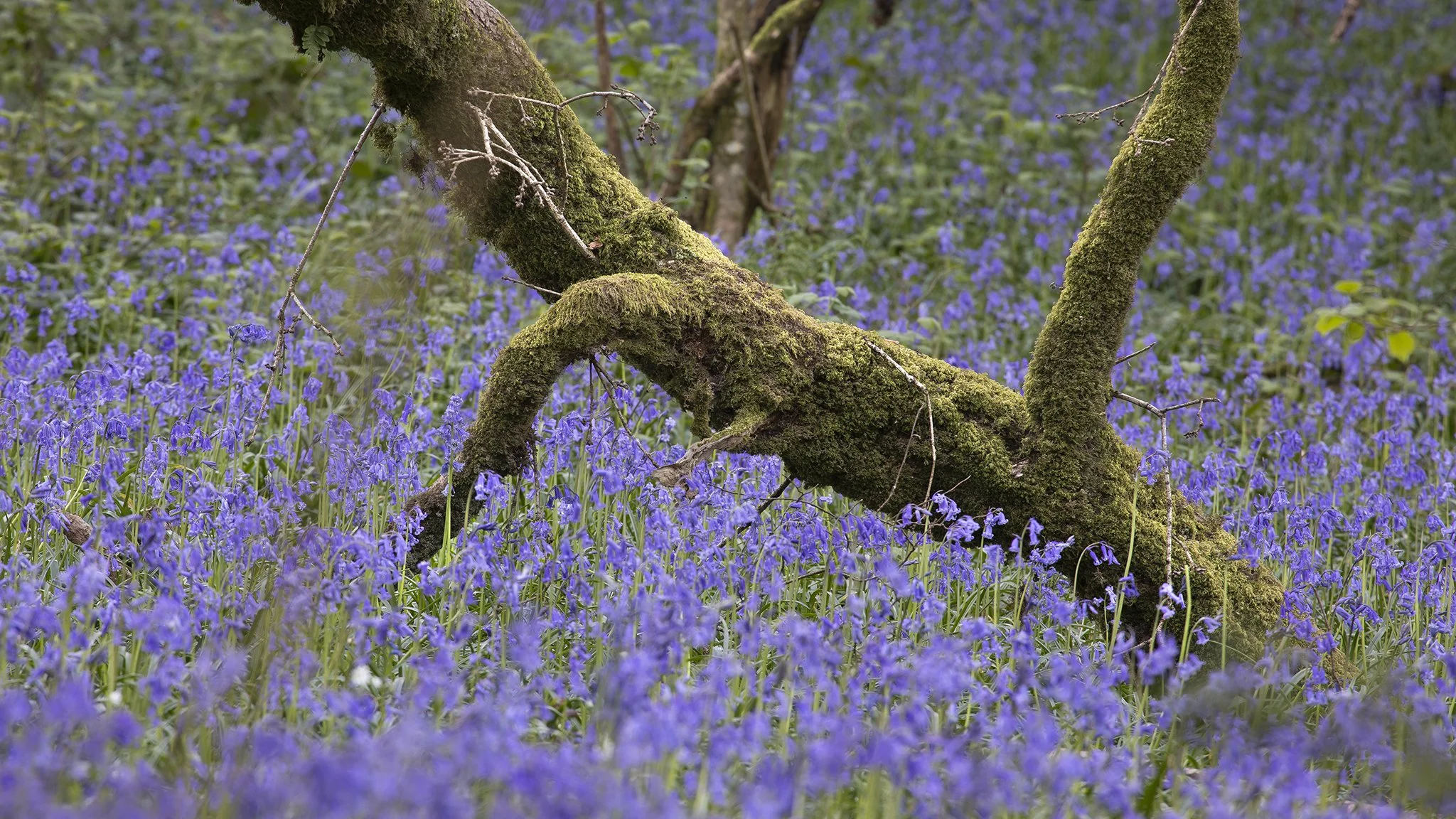
The optimism lasted until the raw files appeared on my computer monitor. Right across the centre of the frame lay a heavy, blurred branch that my eyes had completely ignored while standing on the banking. Despite a 16:9 crop and careful exposure adjustments to lift the light and temperature on the mossy branch, the composition fell short. The unedited reality of the woodland had intruded without my noticing.
That frustration had actually started building back on the moor, moments after taking that first shot. Sensing the view was tight but perhaps missing balance, I literally turned the camera through 120 degrees and moved a few feet to my left to look for an alternative.
I spent a long time wrestling with this second composition. Initially, the broken branch sat too central, leaving a vast, empty pocket of bluebells on the right that made the frame feel awkward. To fix the weight, I swung the lens a few degrees further, pushing the base of the branch to the right third and letting its length travel diagonally across the screen into the background. A leaf from above invaded the upper edge, but at the time, I accepted it. I told myself woodland photography is inherently chaotic, and including these intrusions made the scene feel more authentic, forcing the viewer to work through the confusion just as I had to.
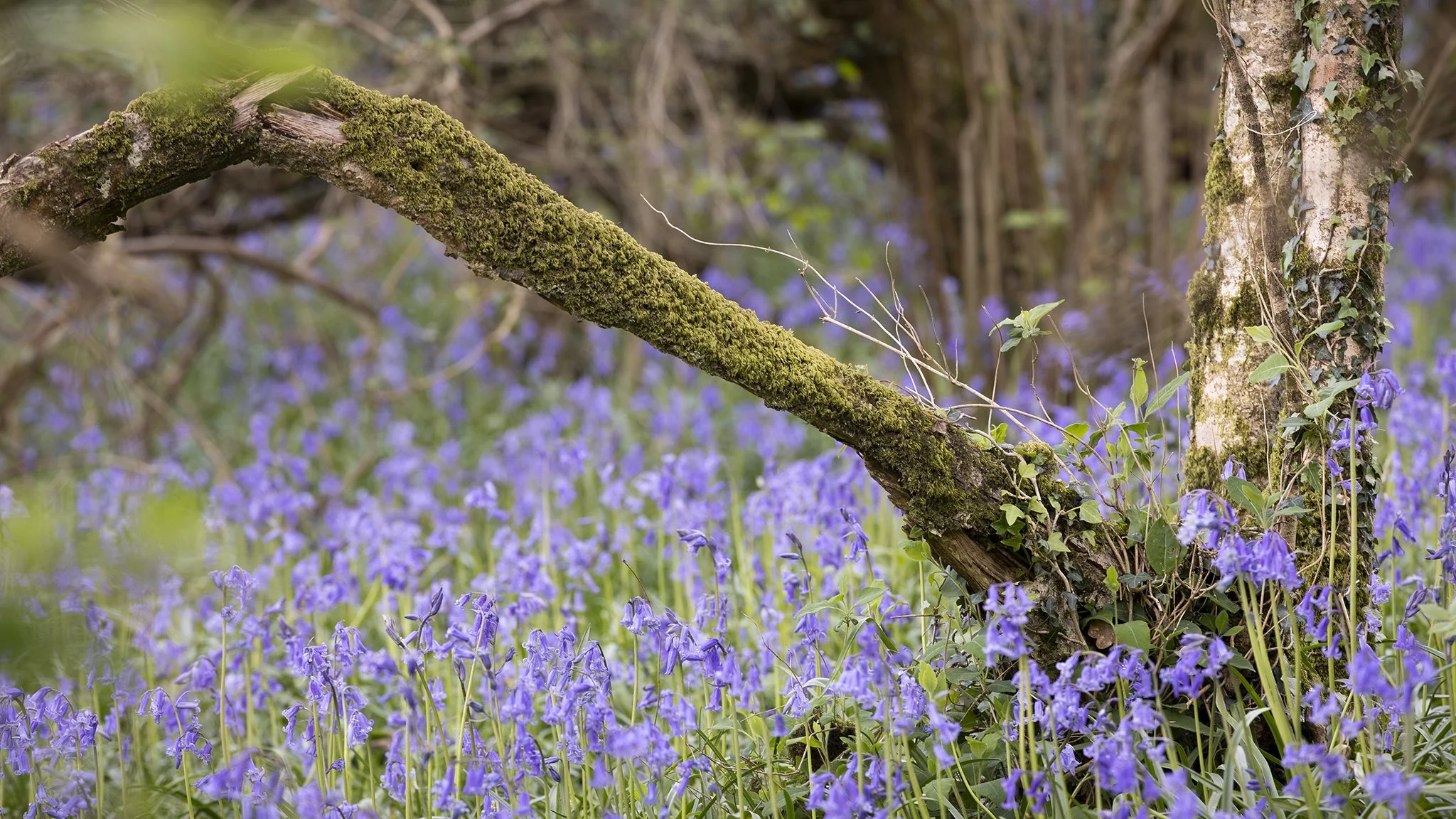
But the desktop monitor is an unforgiving critic. In post-processing, the space on the right still felt empty, and the invading leaves looked accidental rather than deliberate. I had to crop heavily back toward my initial view, compromising the breathing room I wanted. Two frames in, and the woodland was winning.
When the wider view refuses to resolve, the natural instinct is to retreat into micro-management. If you cannot control the entire scene, you find a single element you can dominate. I abandoned the wide perspective and went close, selecting a single, upright bluebell stem standing out against the distant blur of the hill.
The mechanics here became a battle against changing light and moving air. As the sun rose higher, creating harsh contrast, I waited for brief moments when the background lit up naturally to separate the stem from deep shadows. I tried a few focus-stacked frames to ensure edge-to-edge sharpness across the foreground blooms, but ultimately preferred the softer, simpler rendering of a single exposure. A classic square crop anchored the straight lines of the stems.
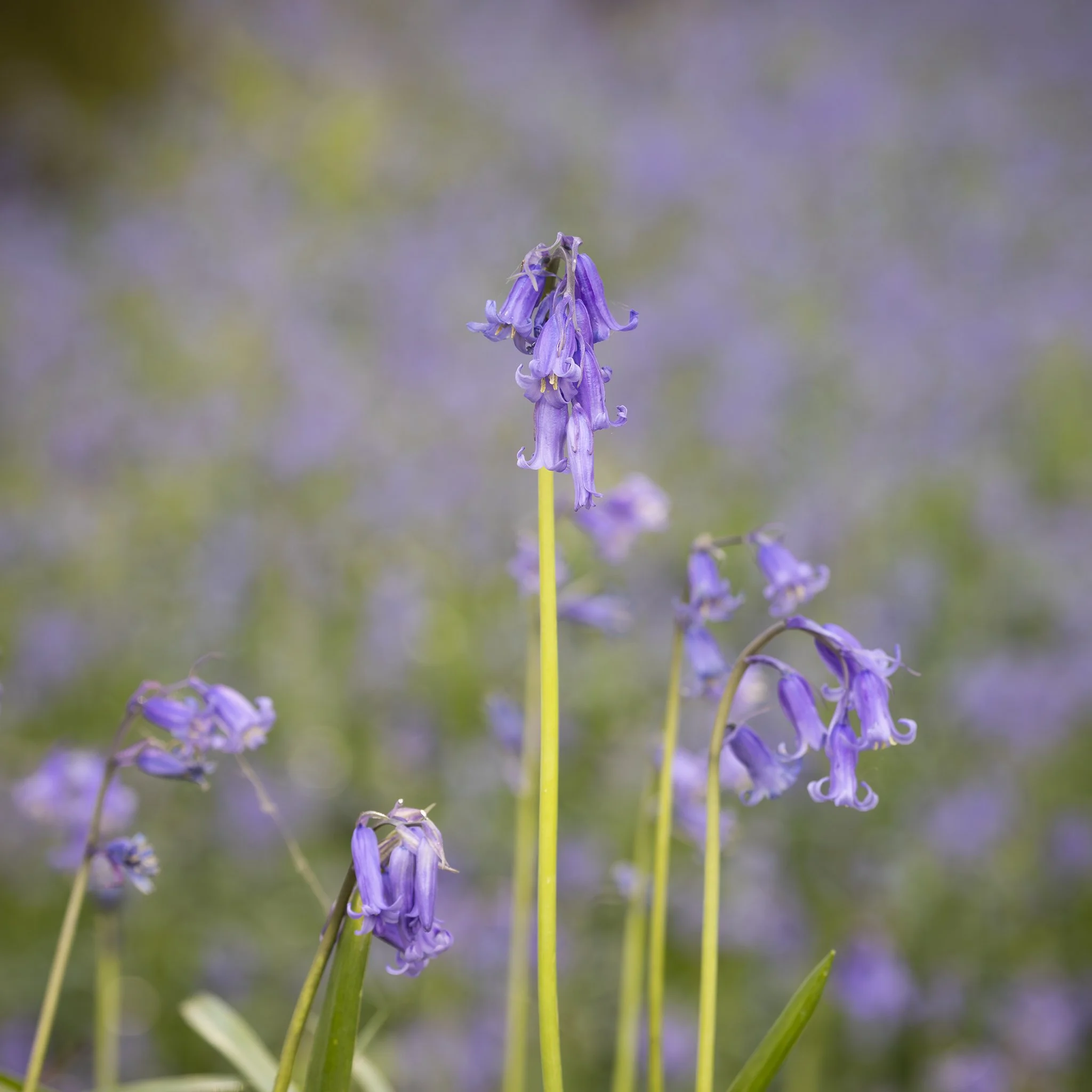
It is a pleasant, clean image, for me the most successful of the set. Yet packing up the gear, the familiar creative dissatisfaction returned. It is incredibly easy for photographers to blame the environment—the harsh morning light, the messy undergrowth, or the lack of mist. But the internal thought was far more direct: perhaps I simply do not know how to photograph bluebells.
Woodland composition is a complex puzzle, and accepting that failure is part of the process is difficult when you operate on limited time. I don't regret the session. The joy of that initial discovery on the bridleway was worth the walk alone. The landscape keeps moving, and each spring offers another opportunity to return, clear the mind, and try again to navigate the confusion.
Join the Conversation
I write an intimate weekly letter called Exposed Thoughts. It is a space where I move away from the noise of social media metrics to discuss the psychological grit, technical hurdles, and quiet realities of landscape photography on Dartmoor.
If you are trying to navigate your own creative blocks or technical frustrations in the field, you can join the list below. When you sign up, I will also send you a copy of my Free Field Guide to Sharp Photographs to help you lock down the mechanics before you next head into the chaos.